Every generic study guide eventually says some version of “just remove distractions and focus.” I heard this from ADHD students I talked to more than almost anything else — not as advice they found helpful, but as advice they’d already tried and watched fail. For an ADHD brain, “just focus” isn’t a strategy, it’s a description of the exact thing that isn’t happening automatically. It’s like telling someone with a broken leg to “just walk normally.” The instruction assumes a working part that isn’t there.
The mechanism willpower advice ignores
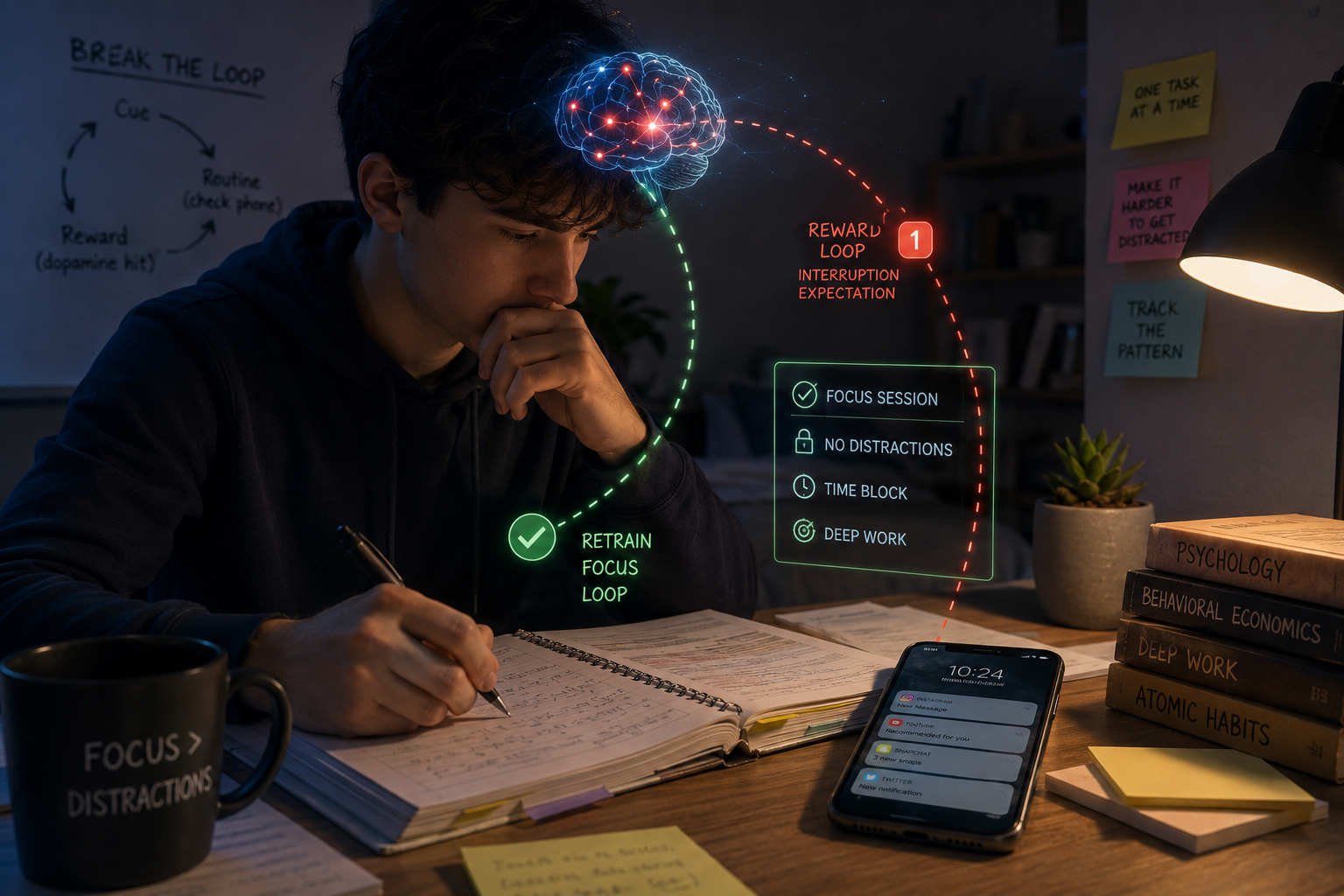
Willpower-based advice assumes focus is a battery you spend down through effort. Talking to ADHD students while building Icarus, and reading the research they pointed me to, the more accurate model is a dopamine regulation difference — the brain under-responds to the reward of doing something important-but-boring, and over-responds to the reward of something novel-but-irrelevant. That’s not a motivation problem you can grit your way through. It’s a wiring difference in which tasks the brain flags as worth doing right now.
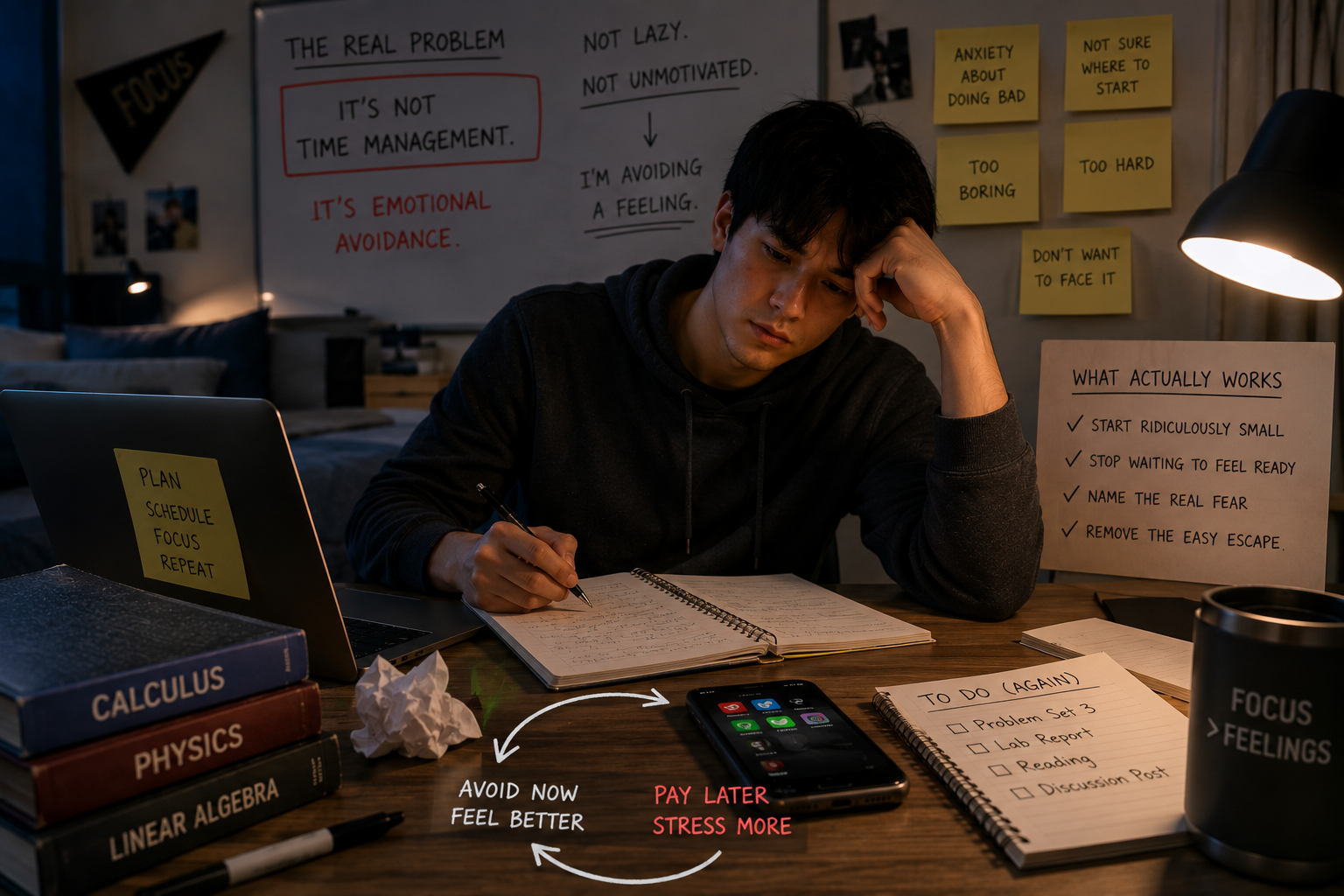
This is why a blocked phone doesn’t fix the underlying issue by itself. Removing the easy dopamine source doesn’t create a substitute — it just leaves the under-stimulated brain looking for the next available one, which several testers described to me as anything else within reach: a different tab, reorganizing notes instead of using them, getting up for the fifth snack of the hour.
Why “just block the apps” complaints kept showing up in my research
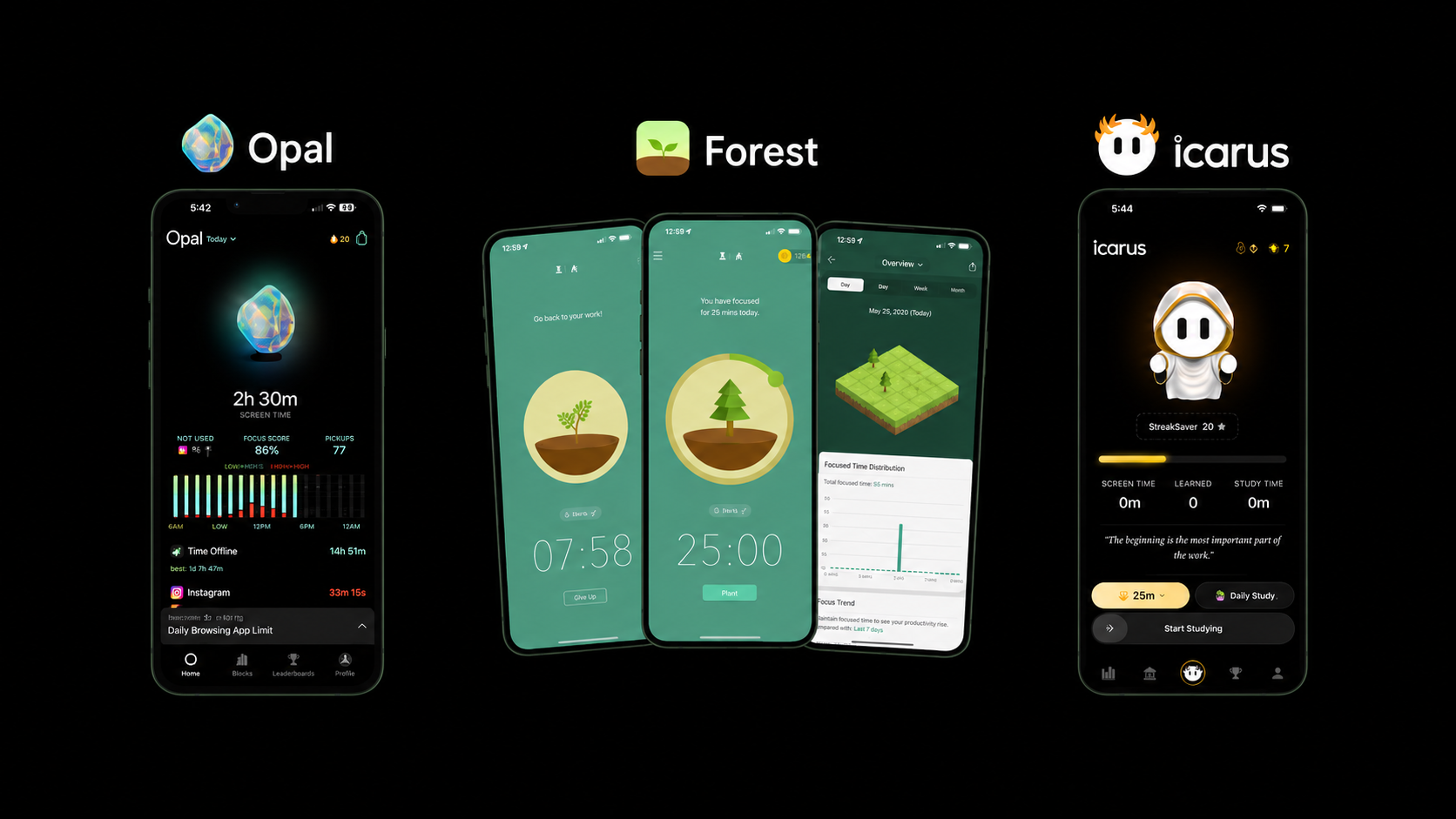
Before I built the unlock mechanic in Icarus, I spent a lot of time reading through Opal, Forest, and Flora reviews to understand why students churned off screen-time apps. The same complaint pattern showed up over and over: “this doesn’t actually help me study, it just stops me from doing the fun thing.” That complaint is the whole problem in one sentence. A pure blocker removes the competing stimulus but does nothing to make the actual work more rewarding to the brain in the moment. For a neurotypical brain that might be enough friction to push through. For an ADHD brain, several testers told me removing the distraction just returns you to an under-stimulated task with no dopamine source at all — often harder to sit with, not easier.
What actually helps, based on what I heard and built around
1. Make the work itself produce a hit, not just remove the alternative. Short, scored, immediately-gradeable tasks — a quiz question you get right, a timer you beat — give the brain a small, fast reward signal from the work, not from a website. This is closer to how games hold ADHD attention than how a textbook does.
2. Shrink the unit until it’s stupidly small. “Study for an exam” has no reward signal until the exam. “Answer these 5 questions” has a reward signal in under a minute. The task size needs to match the length of the dopamine feedback loop the brain is actually running on, not the size of the real goal.
3. Body doubling and external accountability aren’t a crutch — they’re a legitimate regulation tool. Several of the students I talked to study on silent body-doubling calls with friends, and swear by it. An external presence adds structure that compensates for weaker internal structure, which is why it consistently outperforms “just discipline yourself” advice for ADHD students specifically.
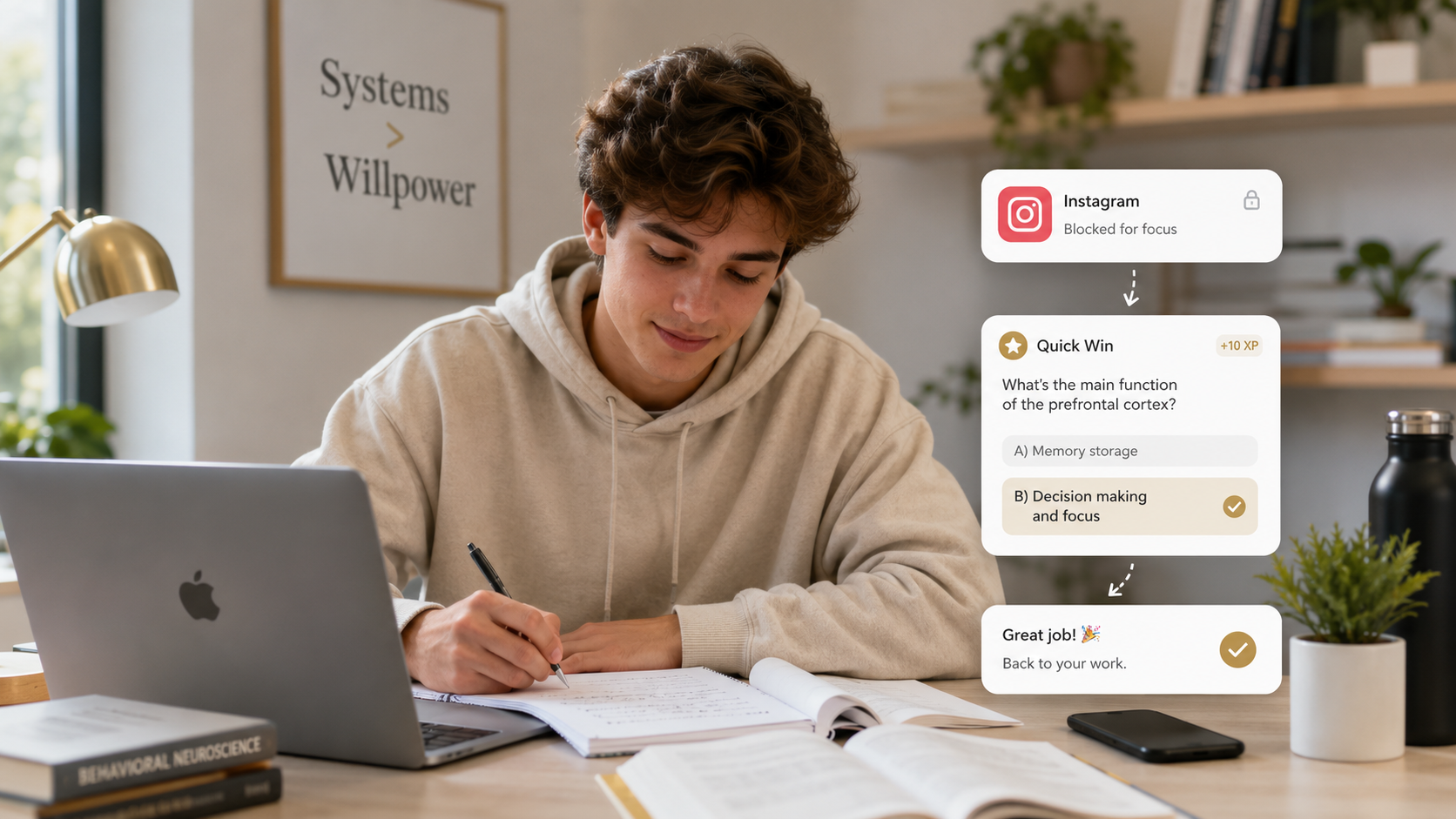
4. Redirect the urge instead of only blocking it. If the brain is going to seek a dopamine hit regardless, the highest-leverage move is making the easiest available hit also be a study rep, instead of trying to eliminate the urge entirely — which is the one thing I heard didn’t work for almost anyone I talked to.
Where this pointed me
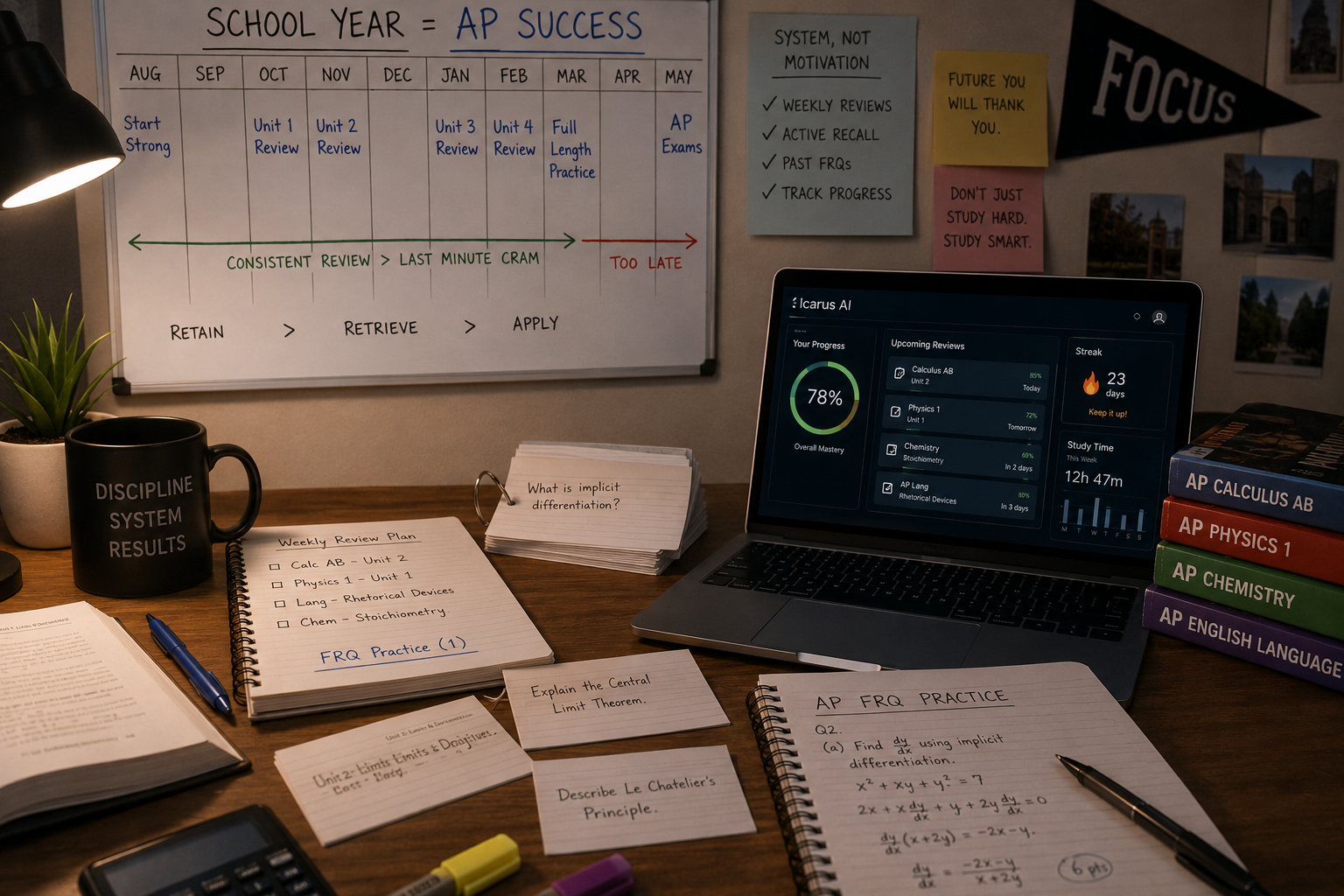
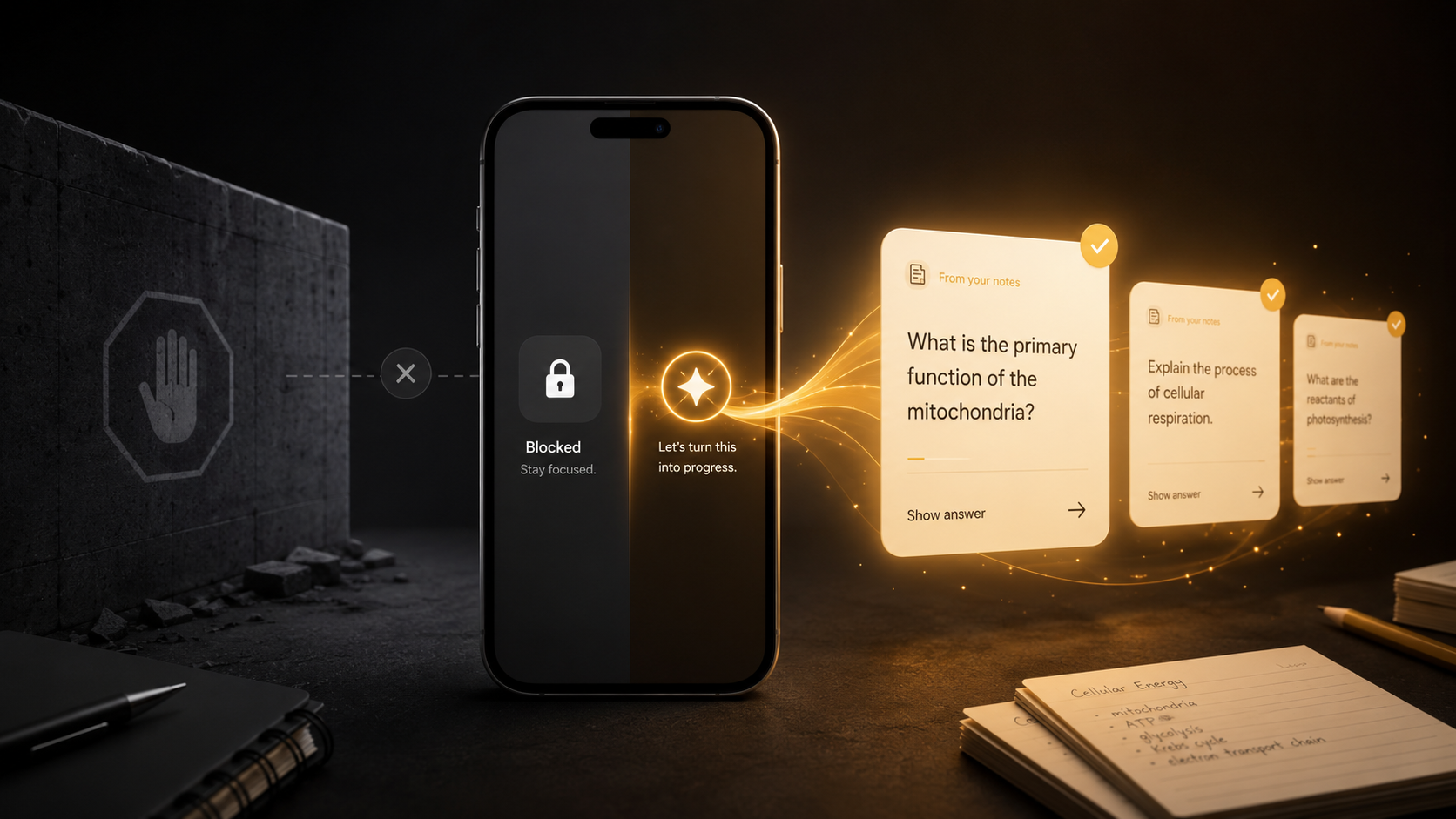
None of this is about trying harder. It’s about matching the tool to the actual mechanism instead of a moral story about discipline. That’s the specific gap I built Icarus AI into: when you reach for a blocked app, you’re not just hitting a wall — you’re handed a short streak of active-recall questions pulled from your own class material, and getting them right unlocks the app for a set window. The urge to seek a quick hit doesn’t get suppressed, it gets redirected into something that produces the same fast, gradeable feedback loop the brain is already looking for — just pointed at your notes instead of a feed.
Try Icarus — built off feedback from students who needed the reward loop solved, not lectured.