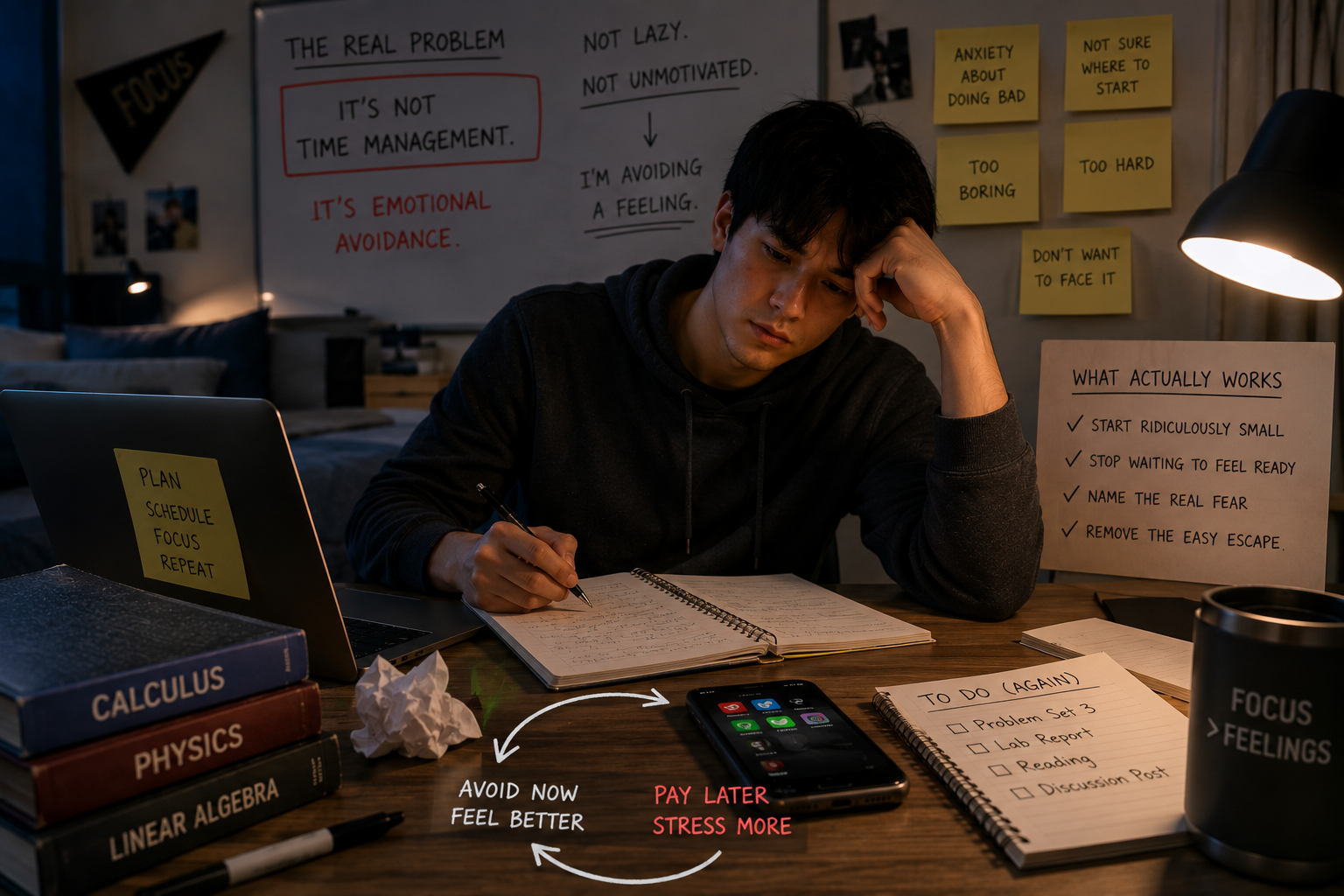
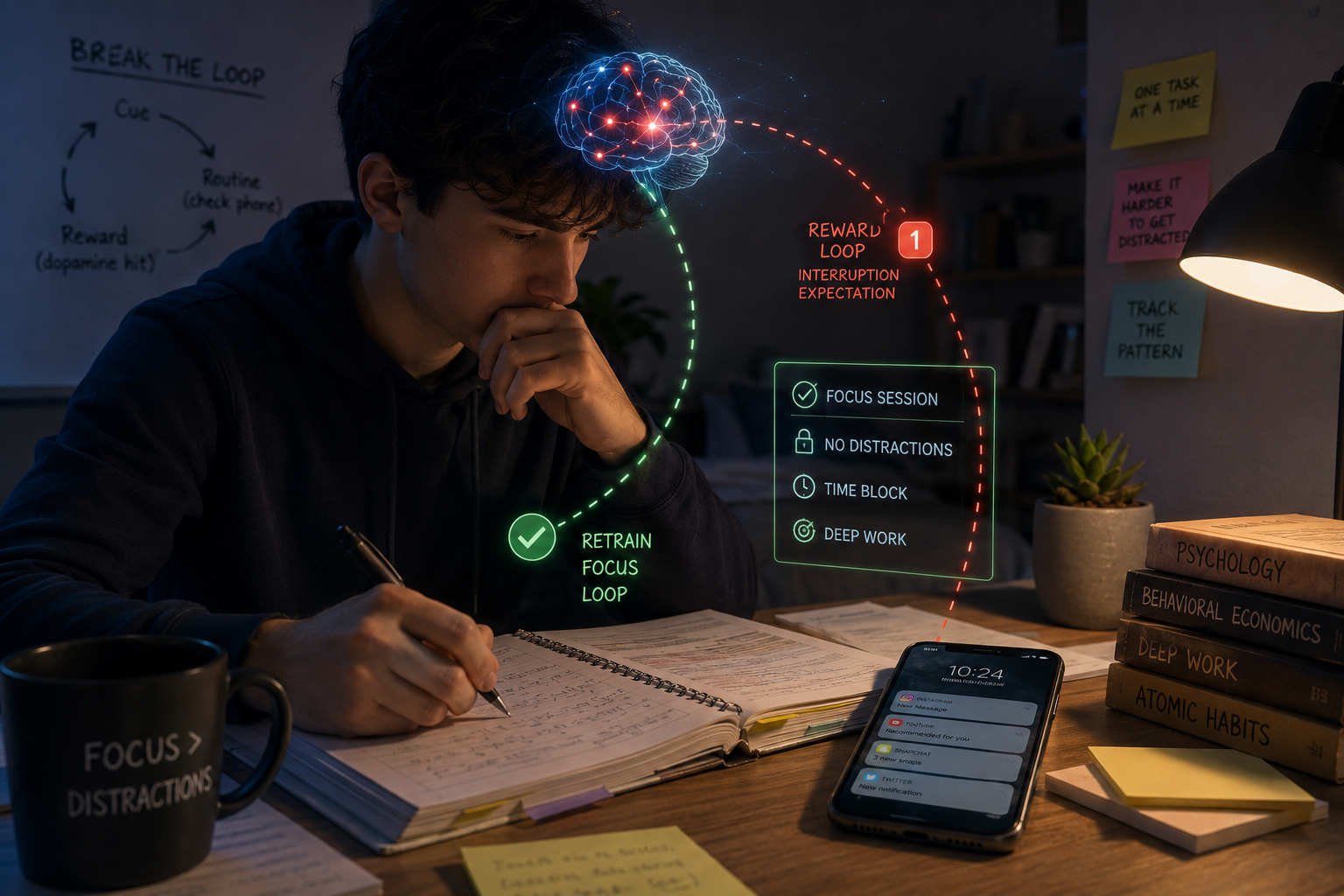
I sit down to study. Ten minutes in, my hand is already reaching for my phone — not because anything happened, but because it’s habit. For a long time I assumed that meant I just had bad focus, or worse, that I was lazy. It took me embarrassingly long to realize what was actually going on: I wasn’t lacking willpower. I had a nervous system that I’d personally trained, one notification at a time, to expect a hit of novelty every few minutes.
I trained my own brain to expect interruption
Here’s the pattern I noticed once I actually paid attention to it: every time I checked my phone mid-problem-set and found something even mildly interesting — a text, a like, a video — my brain logged that as a reward. Do that enough times while “studying,” and your brain starts treating the studying itself as the thing standing between you and the reward. I wasn’t weak-willed. It was operant conditioning, and I’d been running the experiment on myself for years without realizing it.
The result was a shortened attention span that showed up everywhere for me: rereading the same paragraph in a textbook three times, opening a new tab before I’d finished the last one, feeling itchy the second a problem got slightly tedious.
Why “just put your phone in another room” never worked for me
It helped a little, but it never addressed the actual loop. If I left my phone in my backpack but kept the habit of switching tasks every few minutes, I’d just find something else to switch to — a different tab, my own thoughts, the ceiling. The phone was the symptom I could see. It was never the whole disease.
What actually worked was retraining the loop in the other direction: giving my brain small, frequent wins inside the work itself, so studying felt rewarding again instead of like something to escape from every few minutes.
Three things that actually rebuilt my attention span
- I shrank the unit of work. Instead of “study for two hours,” I committed to one very specific, very small task — one page, one problem, one section. Finishing something small and clearly defined gave my brain the same kind of quick win a notification did, except it was attached to the actual work instead of pulling me away from it.
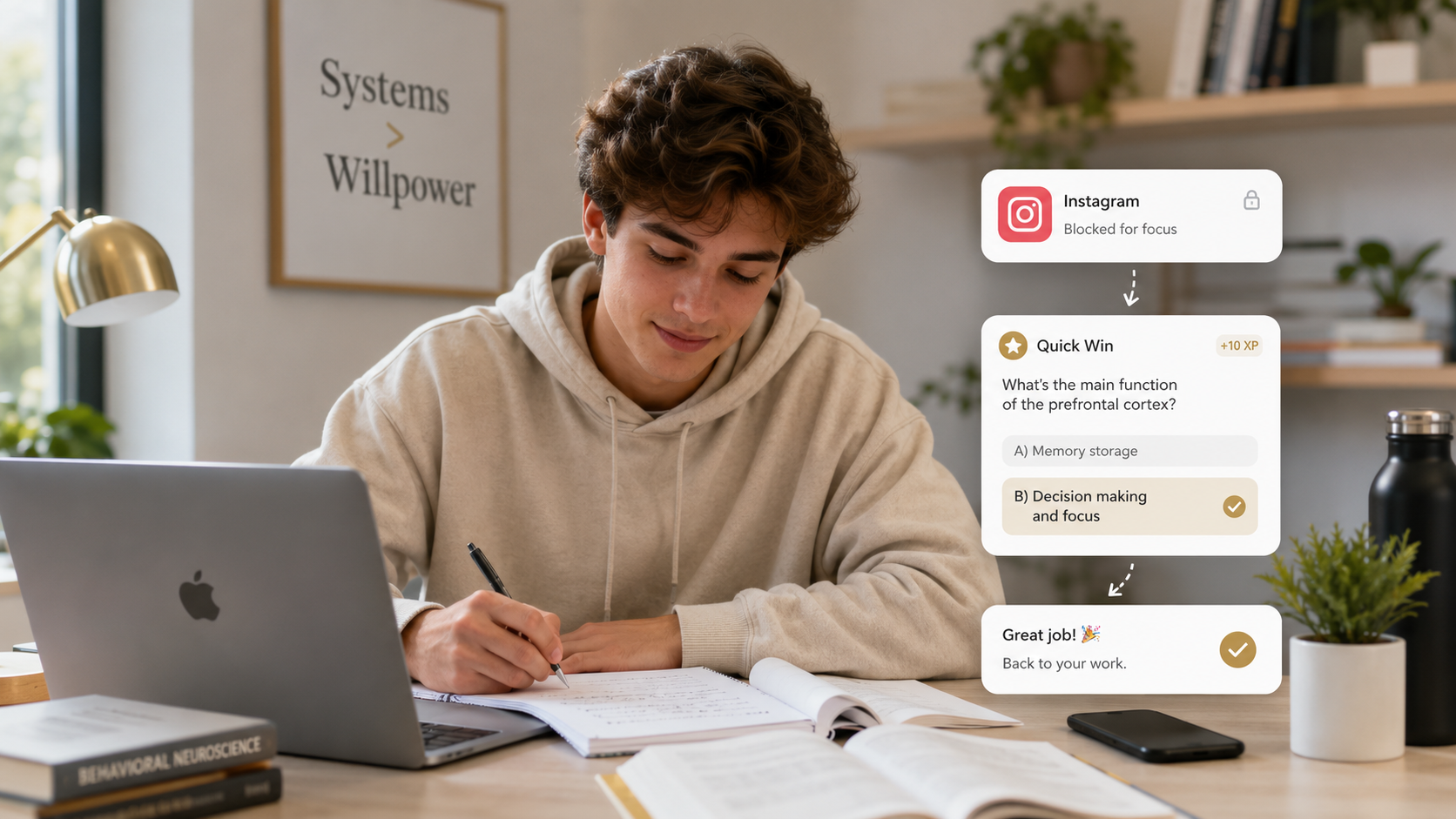
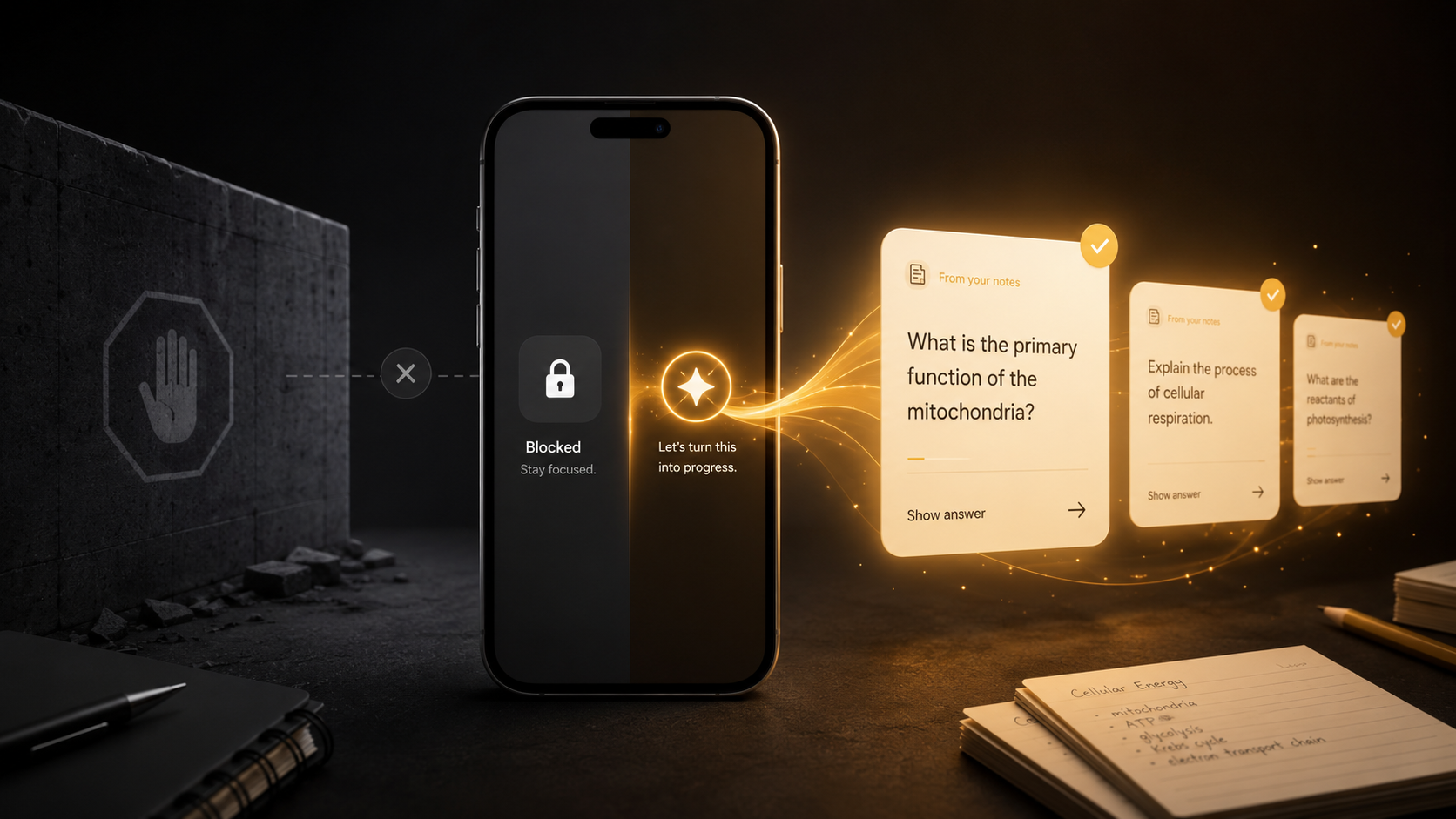
- I made distraction slightly harder than focus. Not impossible — just slightly harder. Face-down phone across the room, logged out of the apps I doomscrolled, blocked outright during a session — any of it removed the “just a quick check” option my brain had learned to reach for automatically.
- I started tracking the pattern, not just the outcome. I didn’t realize how often I actually switched away from a task, because each individual switch felt harmless in the moment. Seeing the real number — sessions interrupted, minutes lost — was what finally made the habit visible enough for me to actually change it.
Rebuilding focus turned out to be a systems problem, not a discipline problem
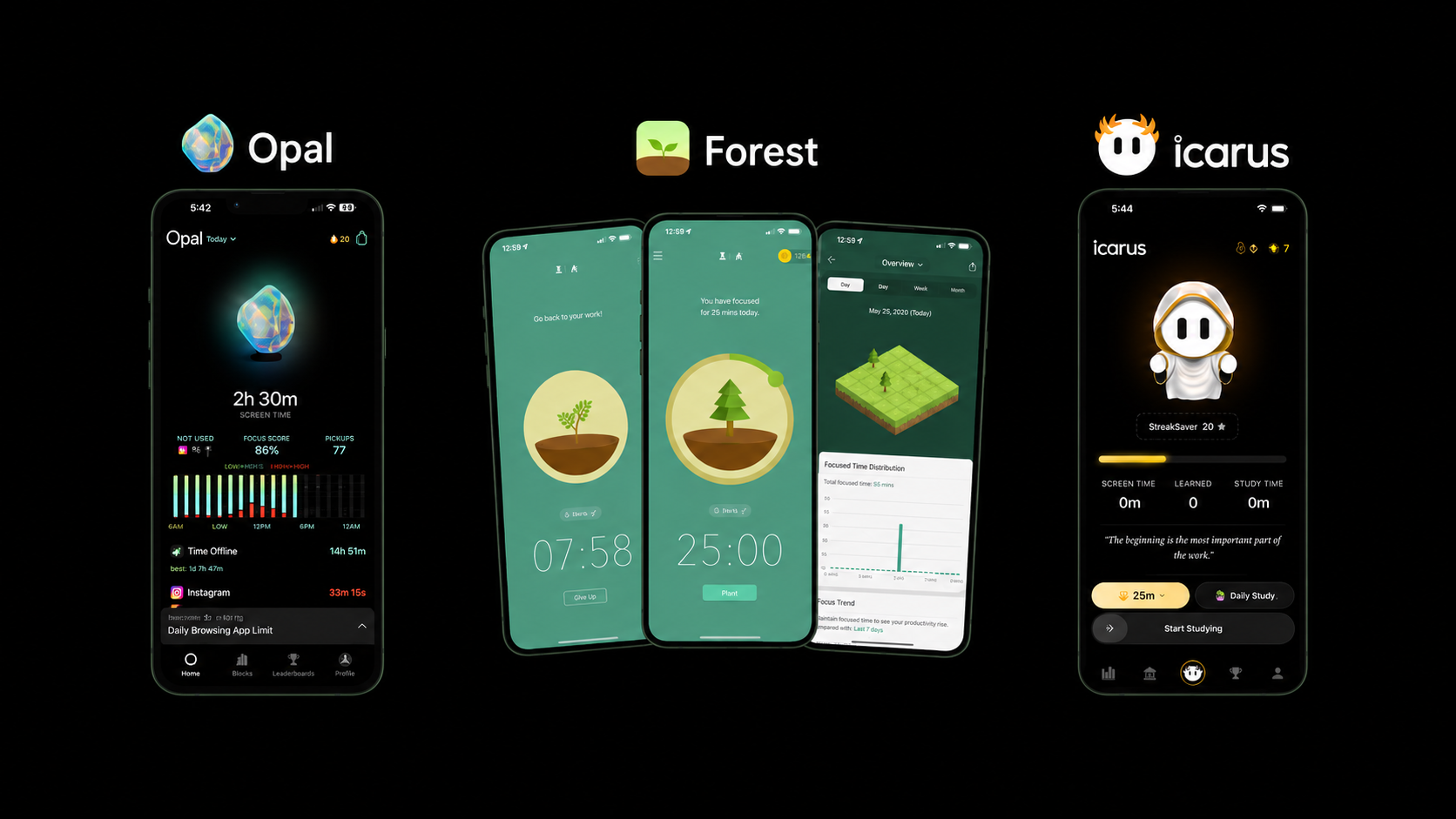
That realization is the entire reason I built Icarus AI. I stopped trying to white-knuckle my way through willpower and built something that automates the boring parts instead — blocking the apps that hijack my attention during a study session, structuring my work into focused blocks, and showing me where my attention actually goes so I could fix the real problem instead of just feeling guilty about it every night.
I didn’t need more discipline. I needed a system that made focus the path of least resistance again — and building that system is what turned into Icarus.