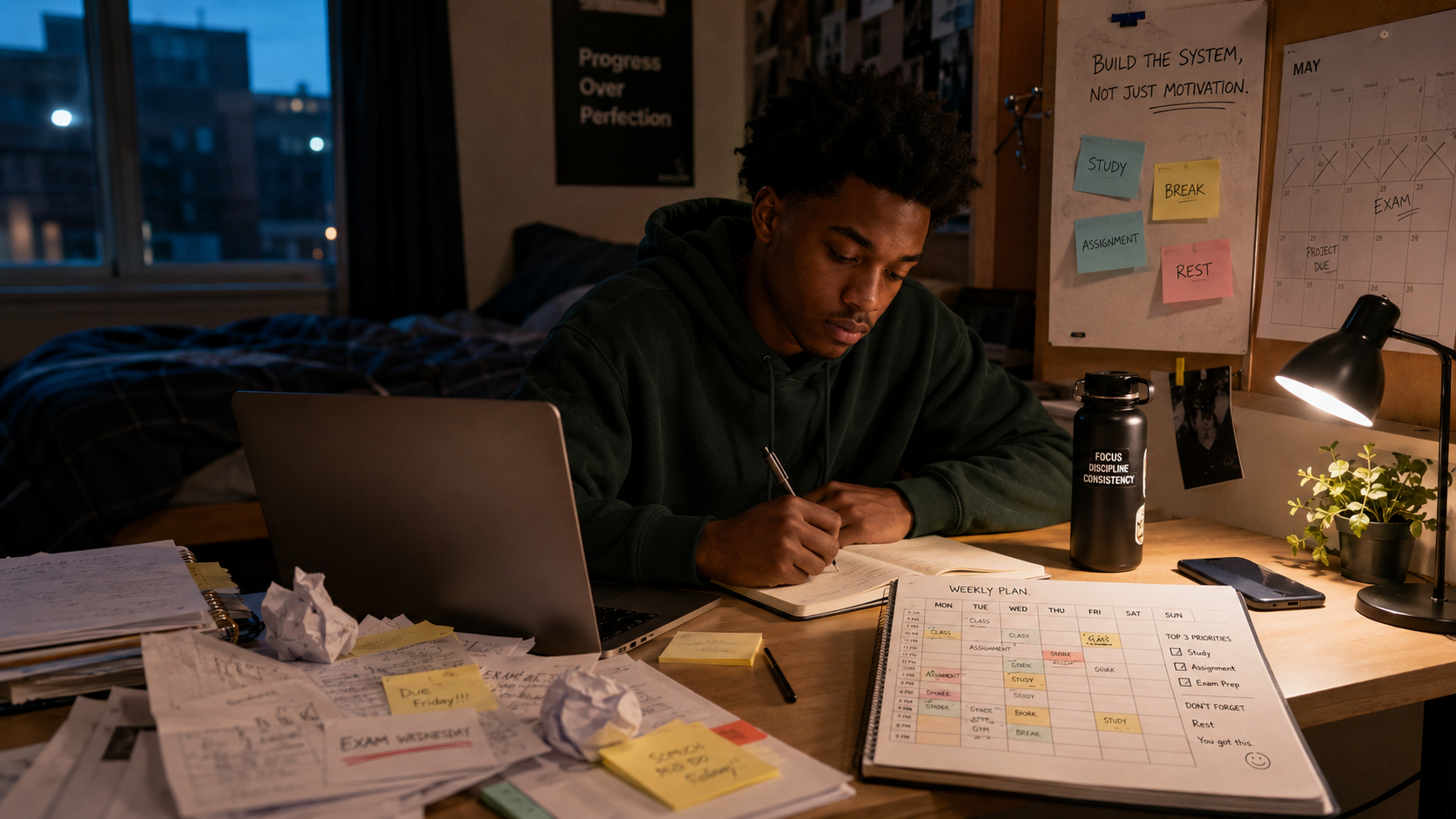
I spent most of freshman year assuming I procrastinated because I was bad at planning. I’d make a schedule, ignore it by Tuesday, and conclude I just needed a better planner or a stricter one. New apps, new templates, same result. It took me an embarrassingly long time to realize the plan was never the problem — I wasn’t avoiding a schedule, I was avoiding a feeling.
Procrastination is an emotion problem wearing a productivity costume
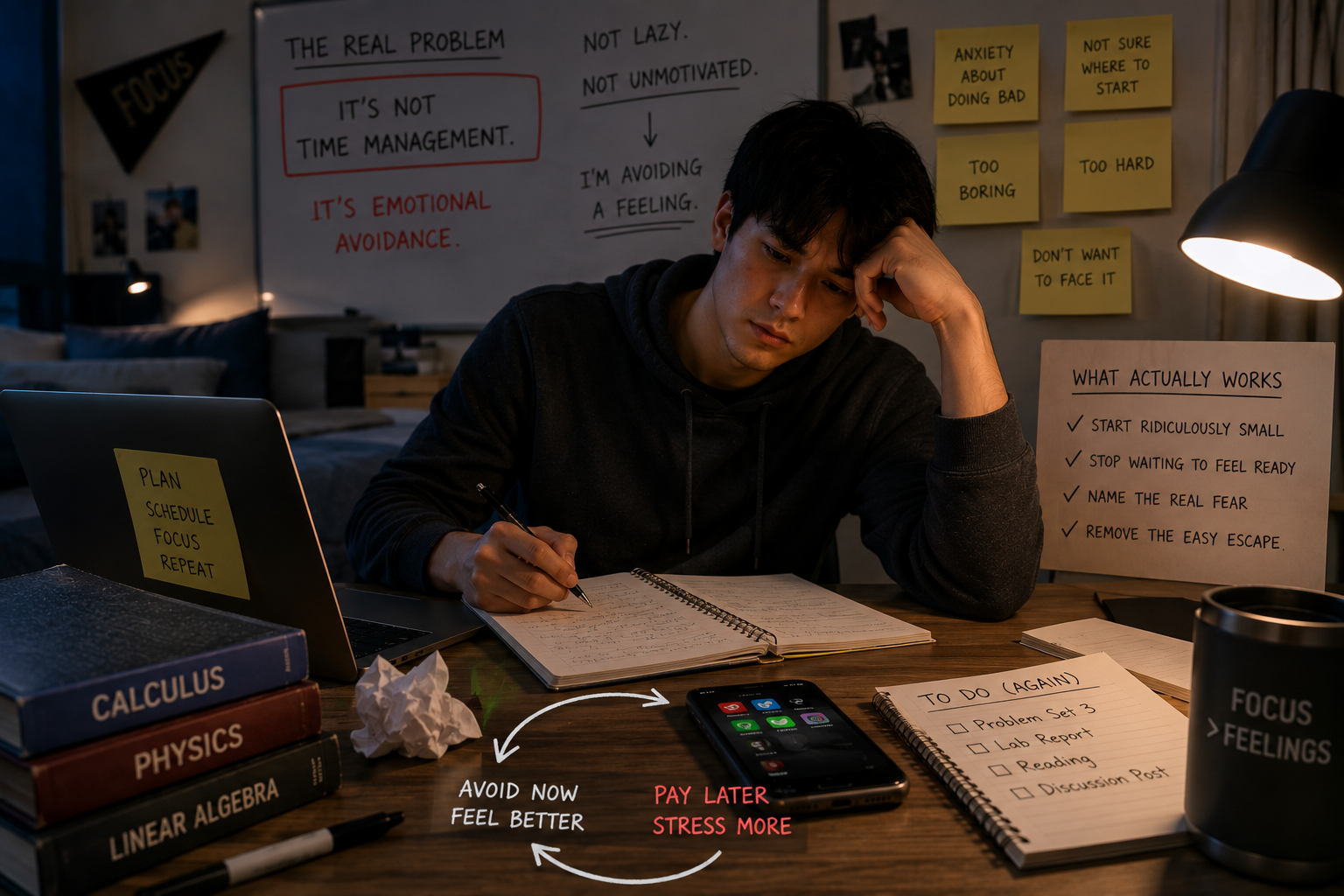
The research on this is pretty clear, and it matched my own experience once I actually looked for it: procrastination isn’t primarily about time management or willpower. It’s about short-term mood repair. When a task carries a negative feeling attached to it — boredom, anxiety about doing it wrong, not knowing where to start, dreading how hard it’ll be — putting it off provides immediate relief from that feeling. Your brain isn’t weighing “problem set now vs. problem set later” rationally. It’s choosing “bad feeling now vs. bad feeling later,” and later always wins in the moment, even though you know it’ll cost you more.
This is why procrastination and difficulty aren’t actually correlated the way I used to assume. I didn’t procrastinate most on my hardest assignments — I procrastinated most on the ones where I felt the most anxious about doing badly, which wasn’t always the same thing.
Why “future you” always loses this bet
There’s a concept called temporal discounting that explains the other half of it: we systematically undervalue future costs relative to present ones. Present-me gets the relief of not opening the problem set right now. Future-me inherits the actual consequences — the cram session, the worse grade, the 1am panic. The trade always feels worth it in the moment because the person paying the bill isn’t the one making the decision. I found myself making this exact trade against my own future self, over and over, without noticing I was doing it.
What actually changed this for me (not more planning)
1. I stopped trying to feel ready before starting. Waiting to feel motivated is a trap — motivation for a task I’ve been avoiding almost never shows up before I start, only after. I started treating “I don’t feel like it” as irrelevant information instead of a signal to wait.
2. I made starting absurdly small. Not “write the lab report,” but “open the document and write one sentence.” The emotional barrier is almost always front-loaded onto the start of a task, not the task itself. Once I was a few minutes in, the dread that had been stopping me was usually already gone.
3. I got explicit about what I was avoiding. “I don’t want to do this” is vague. “I’m avoiding this because I’m worried I’ll get a bad grade and it’ll confirm I’m behind” is specific — and specific fears are a lot easier to argue with than a vague sense of dread.
4. I removed the easy escape route. None of the above mattered much if my phone was sitting right there offering an instant, frictionless way to avoid the bad feeling. The emotional-avoidance cycle needs somewhere to go — if the easiest available exit is scrolling, that’s where it goes, every time.
Where Icarus fits into this
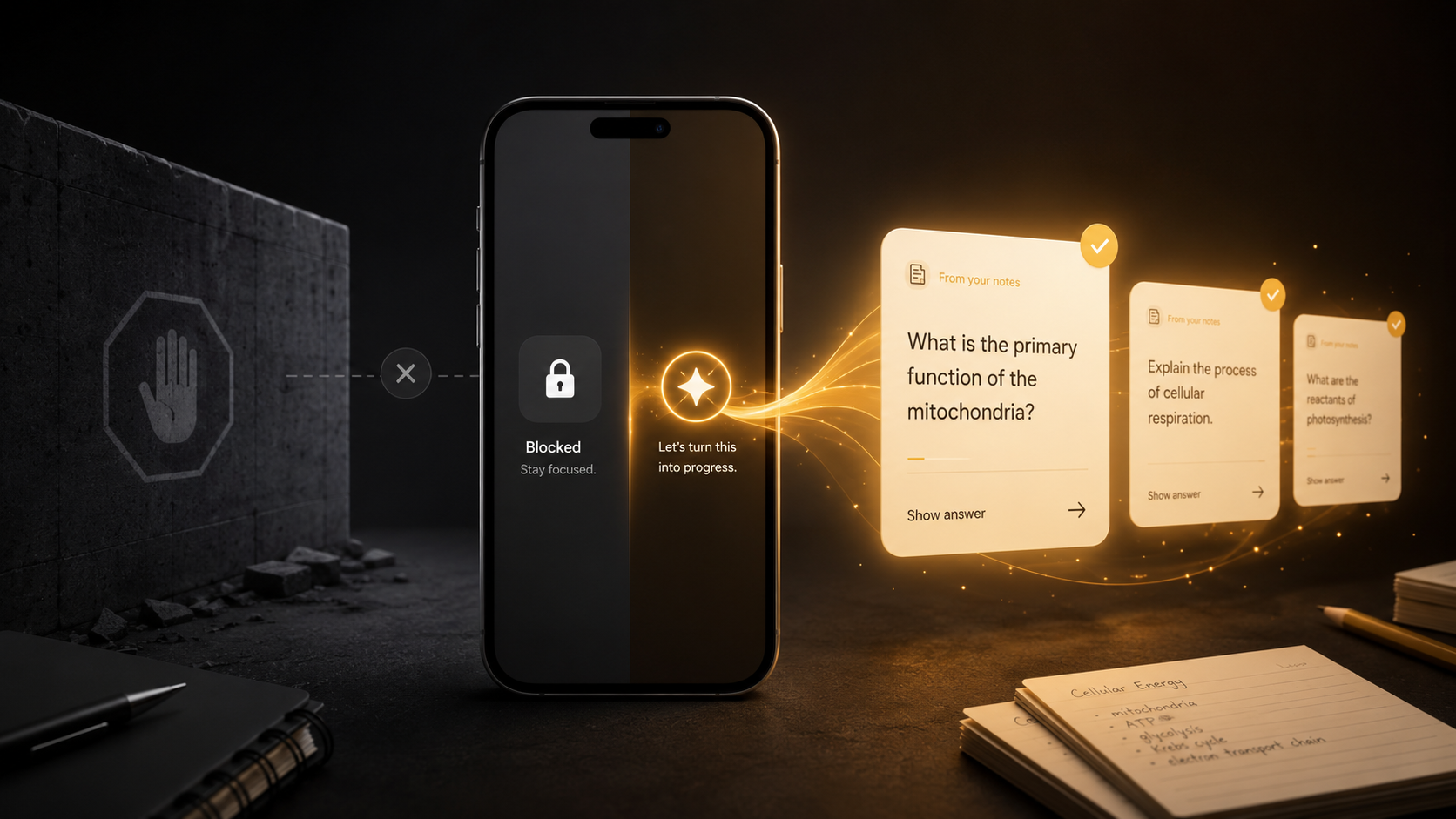
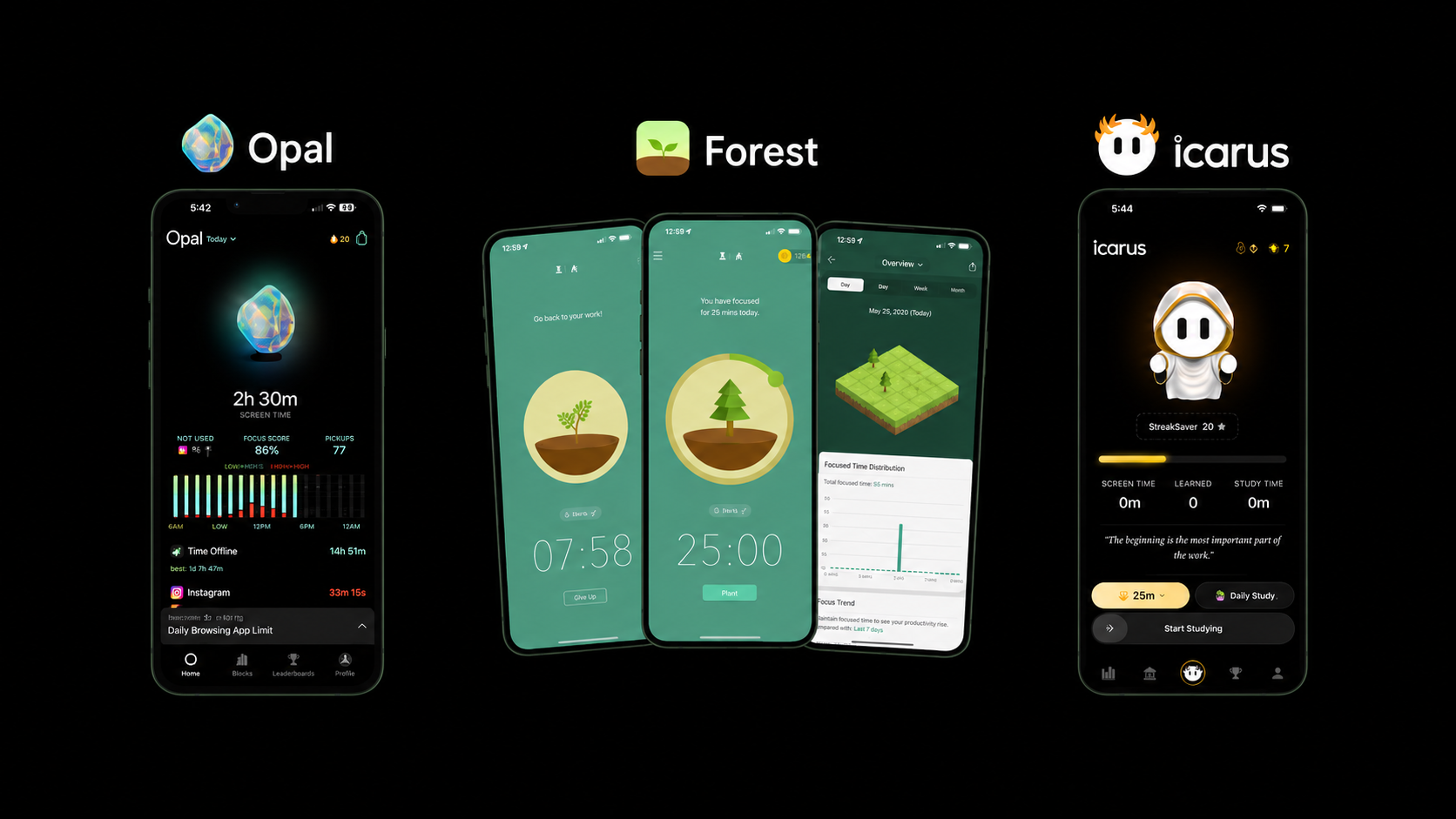
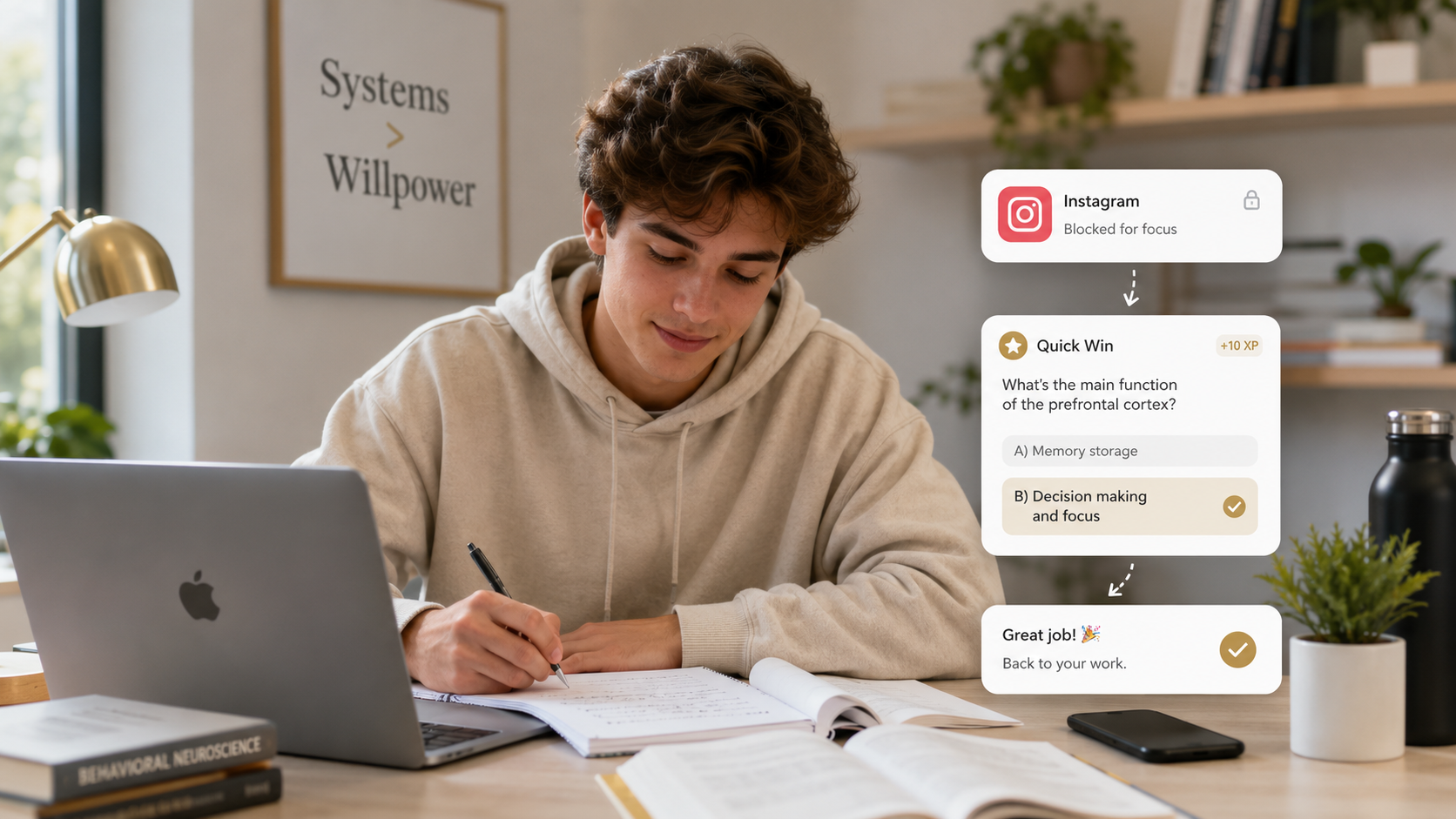
That last point is the whole reason blocking distracting apps is core to Icarus, not a bonus feature bolted onto a study app. When the urge to escape a task hits and I reach for my phone, Icarus doesn’t just block it — it turns that exact impulse into a few active-recall questions pulled from my own class material. The escape attempt itself becomes a small rep of the thing I was avoiding, instead of a clean getaway that resets the avoidance cycle for another twenty minutes.
It doesn’t remove the bad feeling that makes me want to procrastinate in the first place. But it makes the easiest available escape route lead back toward the work instead of away from it — and most days, that’s enough to get me past the moment where I would’ve otherwise lost twenty minutes to my phone and started the whole cycle over again.
Try Icarus — built for the moment right before you’d normally give up and open Instagram instead.