The gap between AP students who walk into May feeling ready and the ones panic-reviewing a full year of content in April usually isn’t talent. It’s when they built their system. I know because I was on both sides of that gap in different years of high school, and looking back, the difference had nothing to do with how smart I was that year.
Why back-to-school is the actual leverage point
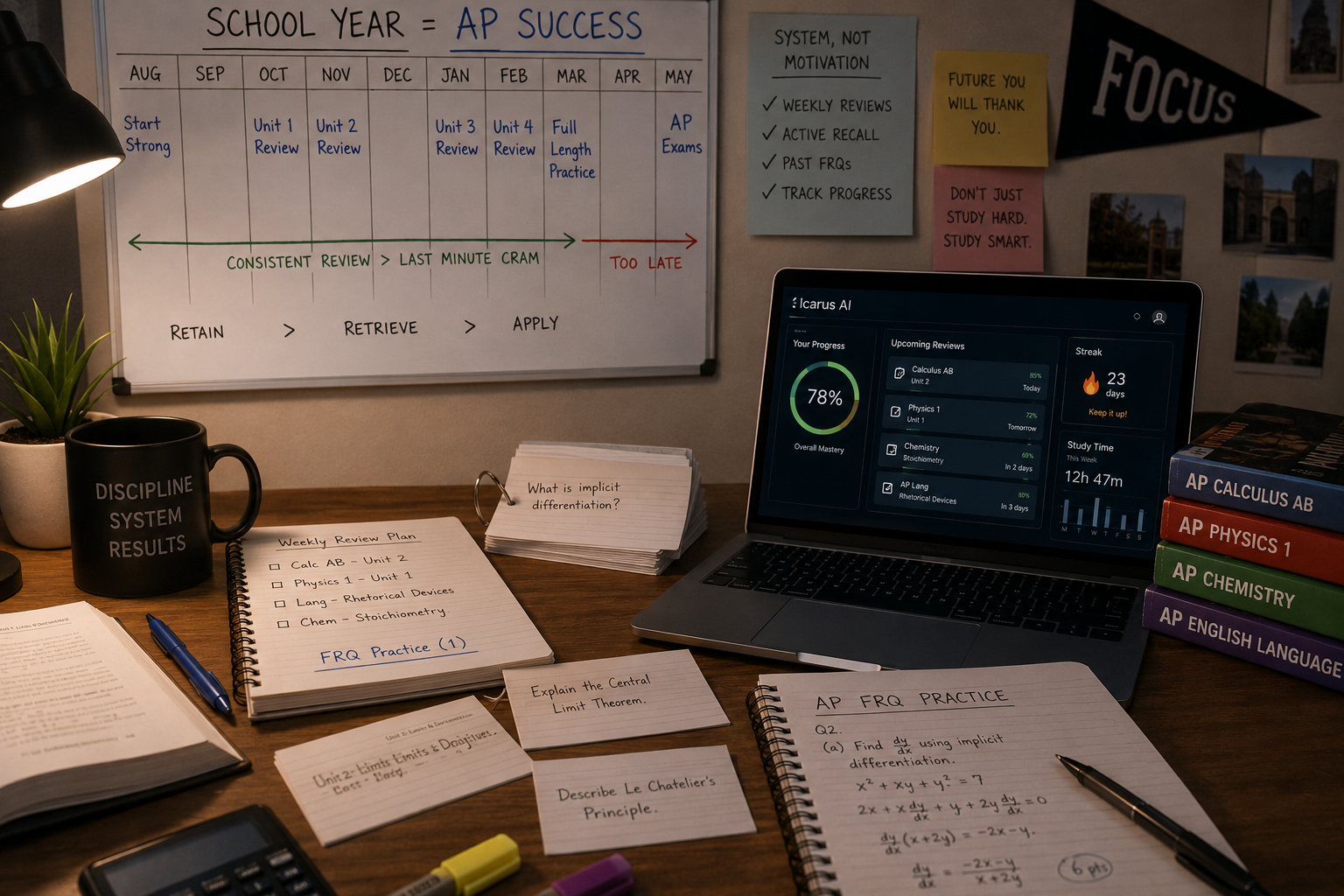
Everyone treats AP prep as a spring problem because the exam is in May. But the exam only tests what you retained, not what you crammed recently — and retention is a function of how consistently you reviewed material across the entire year, not how hard you studied in the final weeks. The year I started reviewing in April, I was trying to fix ten months of gaps in four weeks, and it showed on the actual exam. The year I started in the fall, those same kinds of gaps got caught and closed one unit at a time, as they happened, and May felt almost anticlimactic by comparison.
What an actual system looked like for me (not just “study more”)
1. Review each unit within a week of finishing it, not months later. The forgetting curve is steepest right after you first learn something. A quick review while the unit was still fresh was far higher-leverage for me than the same amount of time spent relearning it from scratch in March.
2. Separate “learn it” from “prove I can retrieve it.” Rereading notes and highlighting slides felt like studying but mostly built familiarity, not recall. The actual test was whether I could answer a cold question about the material weeks later without looking anything up — so my system needed a retrieval step, not just an exposure step.
3. Practice the exam’s actual format early, not just the content. AP exams reward specific skills — timed multiple choice, FRQs with a rubric, DBQs with source analysis — that are different from just “knowing the material.” The years I only started practicing the format in April, I was learning two things at once under time pressure: the content and the test-taking skill. Once I separated them and started format practice early, even before I’d finished the syllabus, both got noticeably easier.
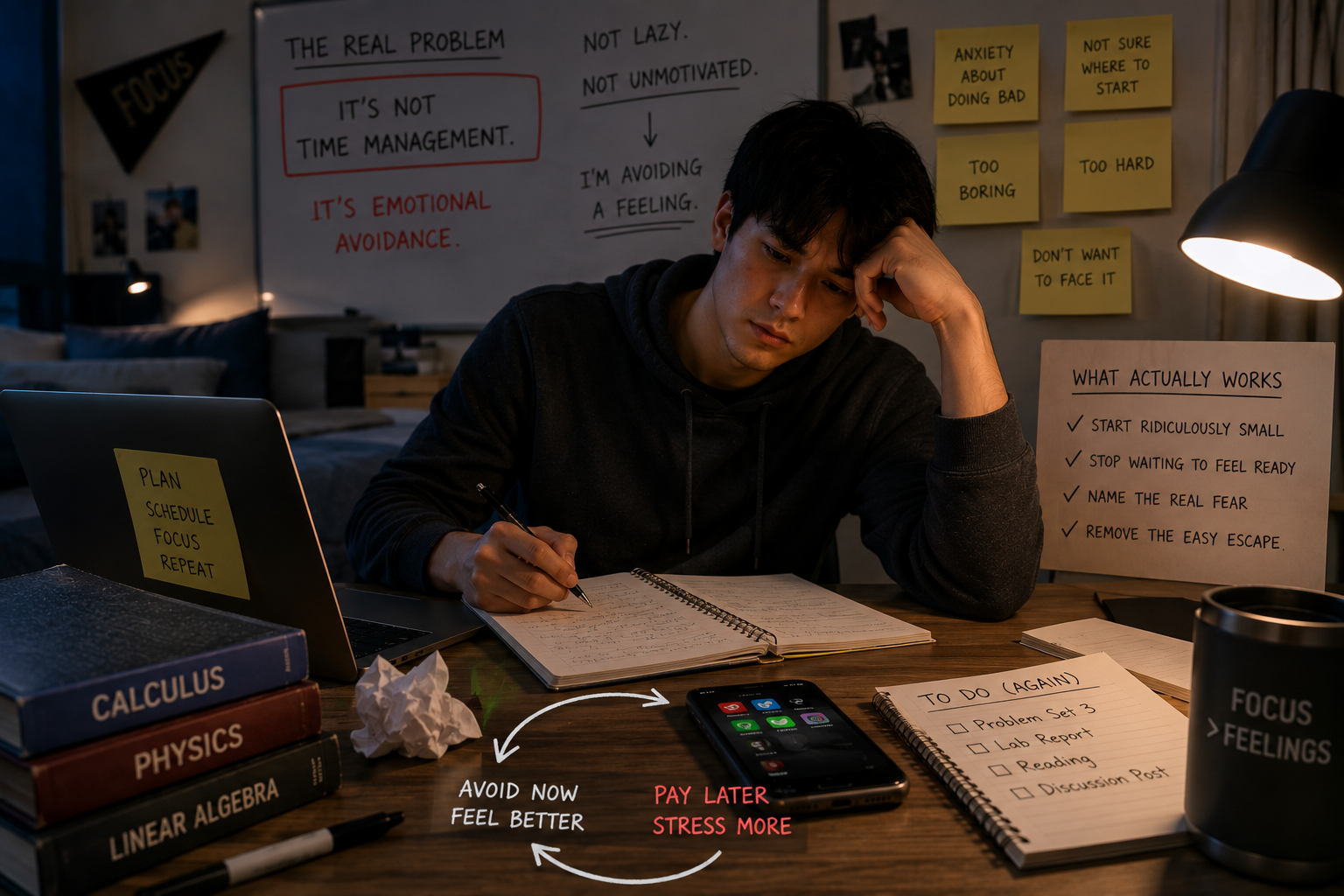
4. Make review a scheduled habit, not a reaction to anxiety. My system fell apart whenever review only happened after a bad quiz grade triggered panic. A fixed weekly review slot, treated like a class I couldn’t skip, is what actually survived a busy semester for me — reactive studying never did.
Where this got easier once I built the right tool
A system like this is simple to describe and was genuinely hard for me to run by hand across multiple AP classes at once — which is exactly the gap I built Icarus AI to close. You can now start with free class-based study content, then upgrade to Scholar when you want review questions generated from your own class notes and slides. Either way, the point is the same: unit 2 doesn’t quietly decay while you’re deep into unit 6.
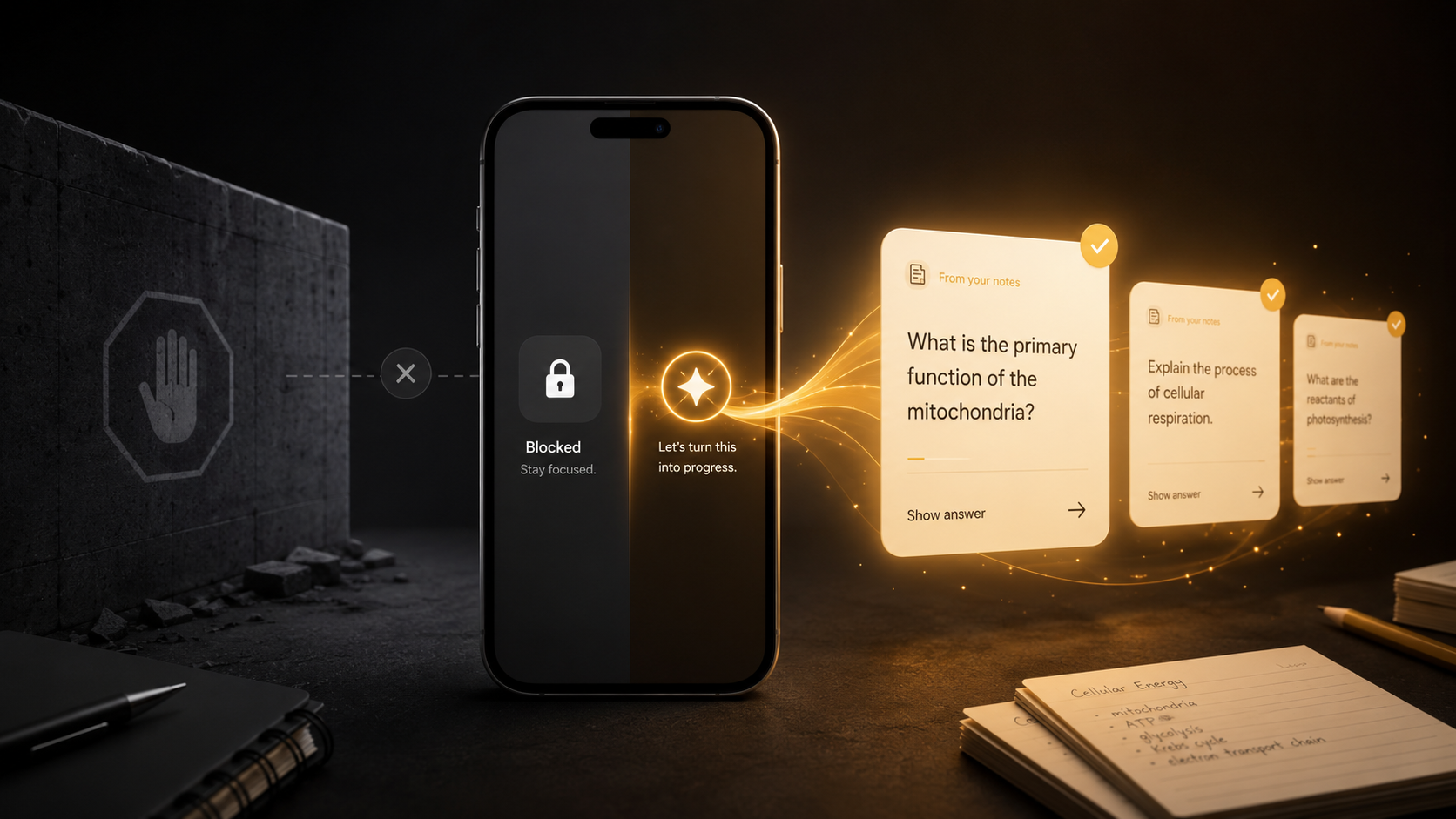
Distracting apps get restricted during the study windows you set, and unlocking one costs you a few correct answers on your own material — so even the moments you’d normally lose to your phone turn into review reps.
Set up your system now — the students who feel ready in May are the ones who started in August.