
The Pomodoro Technique — 25 minutes of focused work, then a 5-minute break, repeat — is probably the most recommended study method on the internet. It’s also the method that made me feel like something was wrong with me for most of freshman year, before I figured out the problem was the method, not me.
Why the 25-minute timer backfired on me specifically
Pomodoro was designed around a fixed interval because it’s easy to explain, not because 25 minutes is a magic number for the human brain. In practice, it caused two very specific problems for me:
- It cut off my momentum right when it started. Deep focus takes me a solid 10-15 minutes to actually kick in, especially on a problem set I wasn’t excited about. If my timer went off right as I was finally in flow, I was forced to stop at the worst possible moment — and restarting that flow state after the break took just as long the second time.
- It treated every task as the same size. Reading a short reading assignment and untangling a hard problem are not the same kind of work, but a fixed 25-minute block treated them identically. Easy tasks got dragged out to fill the time; hard tasks got artificially chopped up before I’d made real progress.
What I actually use now, depending on the problem
When starting is the hard part: I use a genuinely tiny timer — 5 or 10 minutes — with the explicit rule that I’m allowed to stop when it goes off. The trick is I basically never actually stop, because starting was the real barrier the whole time. This works better than Pomodoro’s fixed 25 because it lowers the activation energy without capping my momentum once I’m in.
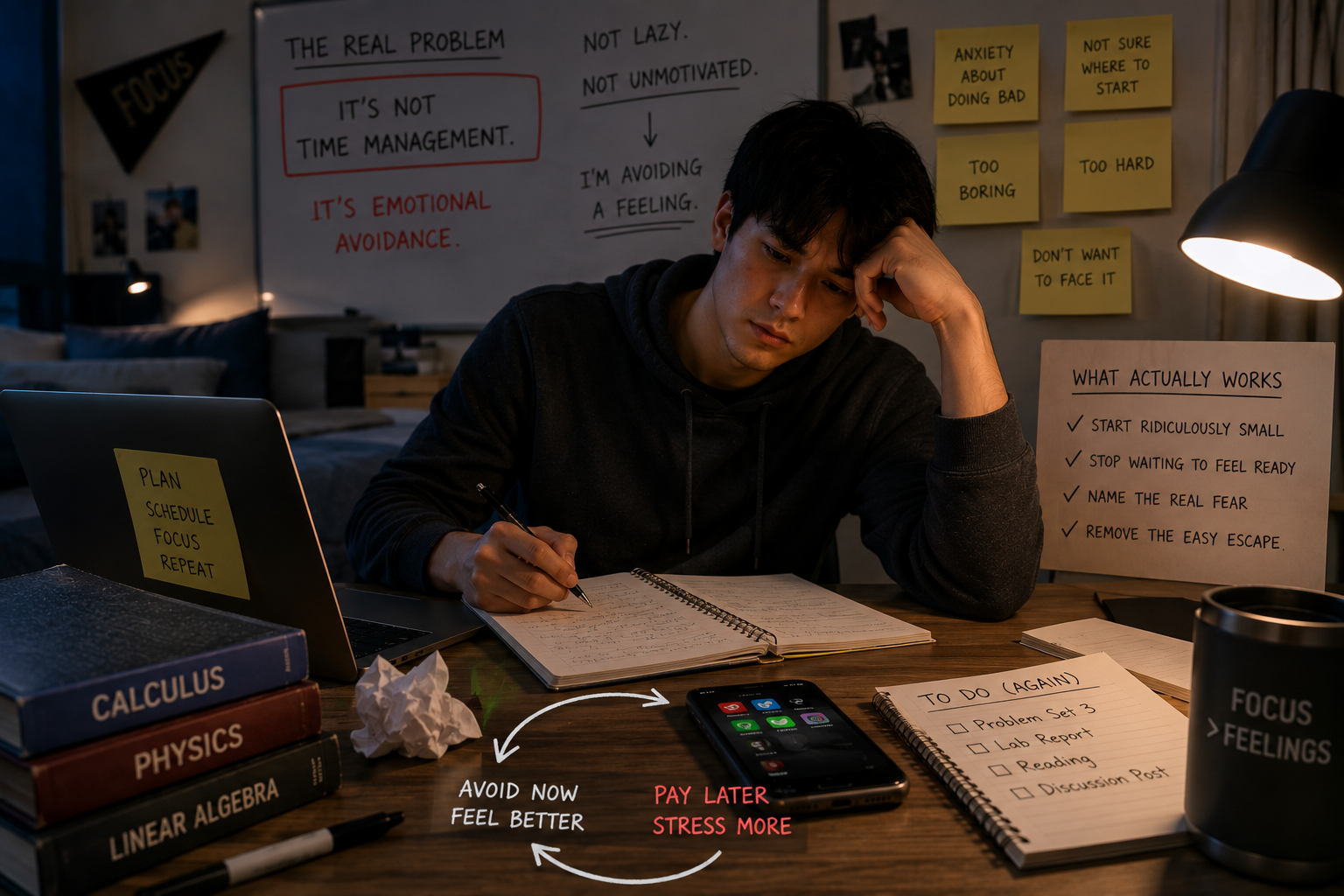
When I can’t stop reaching for my phone once I’m working: Timers never fixed this for me — environment did. No interval length matters if my phone is next to me buzzing every four minutes. That’s a blocking problem, not a scheduling problem, and it’s the reason I eventually built Icarus.
When my workload varies wildly in difficulty: I switched to task-based blocks instead of time-based ones — “finish this problem set” instead of “work for 25 minutes.” I let the task define the session length, and take a break when I actually finish something, not when an arbitrary timer says to.
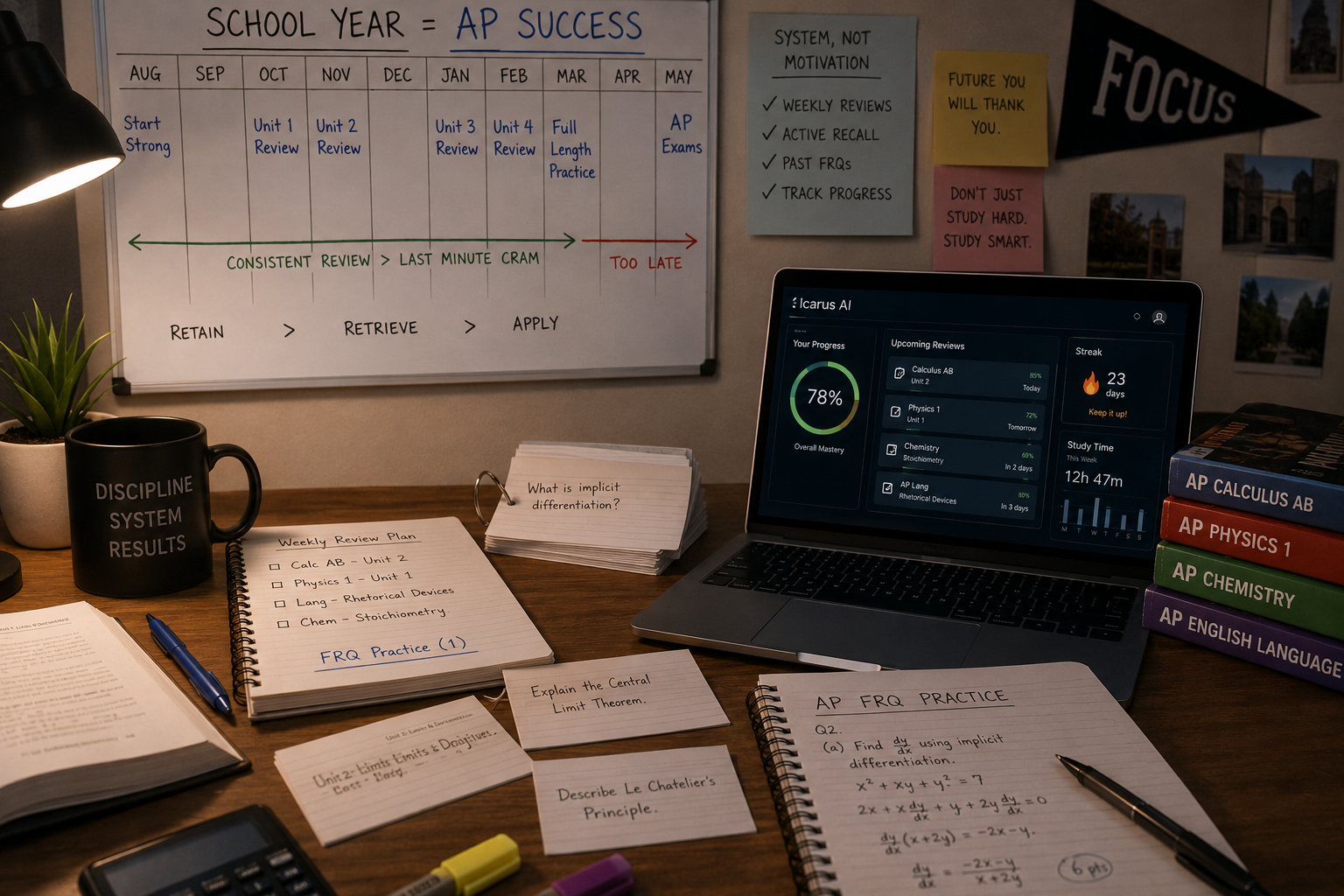
When I lose track of how my day actually went: The issue for me was never the interval — it was that I had no feedback loop. I genuinely couldn’t tell if I’d done four real focus sessions that day or twelve interrupted ones that felt like four. Fixing that took visibility, not a stricter schedule.
The real fix was knowing my own pattern
Nobody’s focus rhythm matches a textbook interval exactly, and mine definitely didn’t. I do my best work in messy 35-45 minute stretches with a long break, not clean 25s. The only way I figured that out was by actually looking at my own data — when I focus best, what breaks my concentration, how long my real sessions last before I start switching tasks.
That’s the gap Icarus AI was built to close, starting with the timer itself. Icarus’s built-in Pomodoro mode doesn’t force the 25/5 split — you set your own study duration and your own break length, so a 45-minute deep-work block or three short 12-minute bursts are just as valid as the textbook interval. And if a session runs long or you’re done early, you end it whenever you want instead of waiting out a countdown that no longer matches what you’re doing.
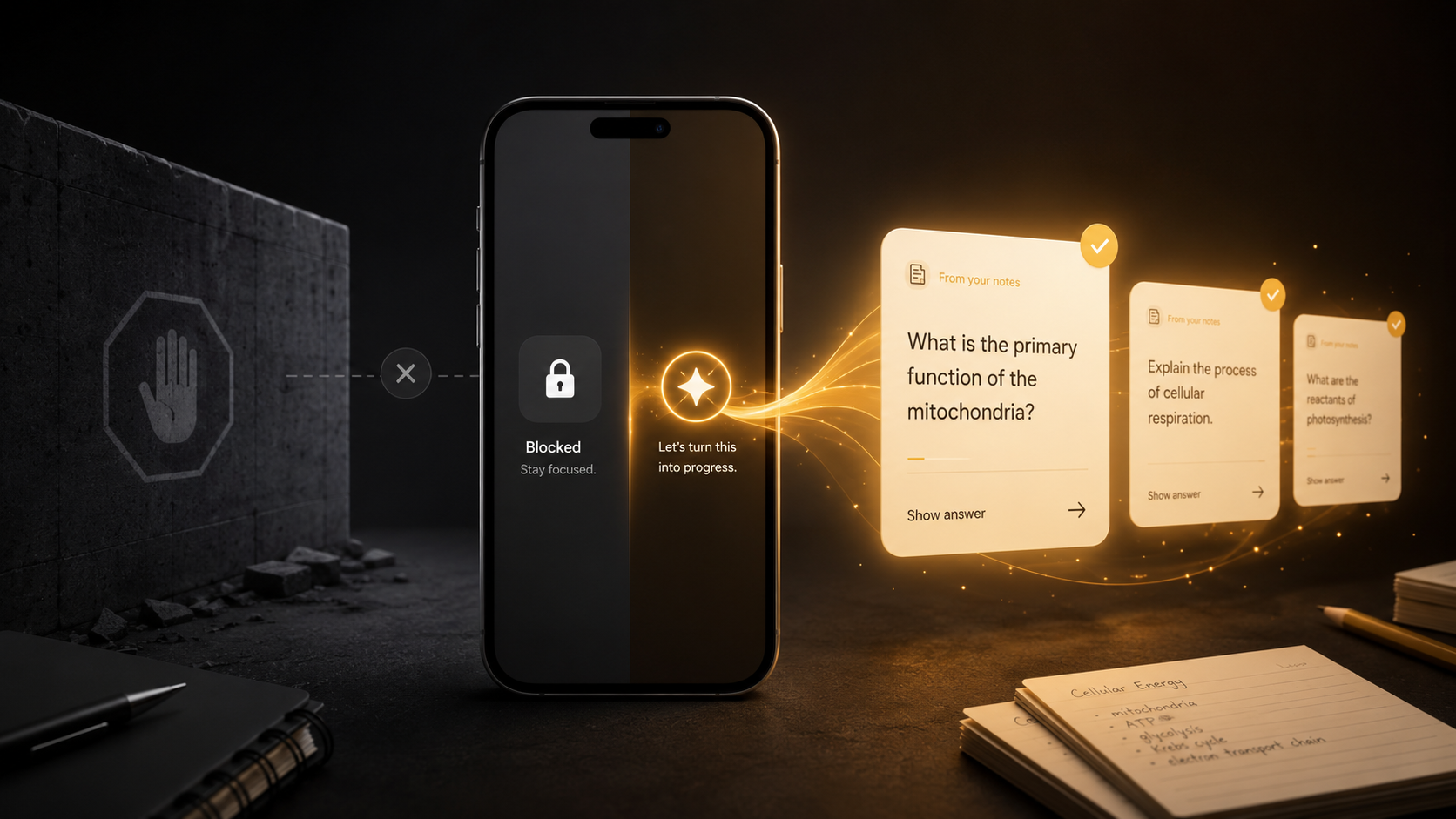
Then it fixes the problem Pomodoro never touched in the first place: what happens when the urge to check your phone hits mid-session. You pick which apps get blocked and set a blocking intensity — Easy, Medium, or Hard — that decides how many questions in a row you need to answer correctly to unlock that app again. Reach for the distraction mid-session, and instead of a flat wall, you’re answering a few questions pulled from your own notes; get through the streak and you’ve earned a short window back. My focus sessions stopped getting chopped up by an arbitrary timer or by my phone, because the thing that used to break my flow now feeds my studying.
No forced 25/5 split. No willpower contest. Just a timer shaped around your actual rhythm, with your biggest interruption converted into extra reps. Grab Icarus and find out what your real focus pattern looks like — not the one invented in the ’80s.